Leaning or Bulging
A wall that's visibly tilting forward, or bulging outward in the middle, is already under more lateral pressure than it was built to handle. This gets worse every winter, not better.
A retaining wall that's leaning, bulging, or cracking isn't a cosmetic problem — it's a sign that hydrostatic pressure from Solano County's expansive clay is already winning. Catching it early is almost always cheaper than a full rebuild after collapse.
Call Now — (707) 714-7043Local Specialists • Free Estimates • Serving Benicia & Vallejo
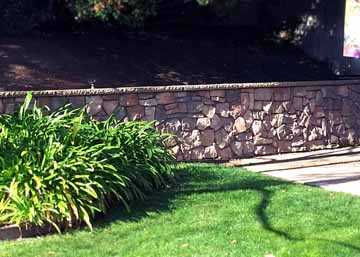
Photo: Jimmy Easterday / Retaining Wall Experts, CC BY-SA 4.0
Most retaining wall failures in Benicia come from the same root cause: water that isn't draining the way it was designed to, pushing against clay soil that expands when wet.
A wall that's visibly tilting forward, or bulging outward in the middle, is already under more lateral pressure than it was built to handle. This gets worse every winter, not better.
Horizontal cracks, separating blocks, or gaps opening up between wall sections usually mean the footing has shifted or the drainage behind the wall has failed.
Persistent damp patches or white mineral staining on the wall face are signs water is finding its way through instead of draining away as intended — a warning sign before structural failure.
If the wall structure itself is still sound, adding proper weep holes and gravel backfill can relieve the pressure that's causing the problem — often without a full rebuild.
If the footing has shifted or the wall has failed structurally, a rebuild with correct reinforcement and drainage is the only real fix — and it's a permanent one when done right.